
There is a specific kind of embarrassment that comes with being seen trying.
We are all very comfortable with the polished end product: the sleek storefront, the professional branding, the feed-worthy images. We’ve been taught that if a business doesn’t look like a well-oiled operation on day one, it isn't a real business; it’s just a hobby you’re taking too seriously. And because of this, we are deeply, annoyingly allergic to the middle part.
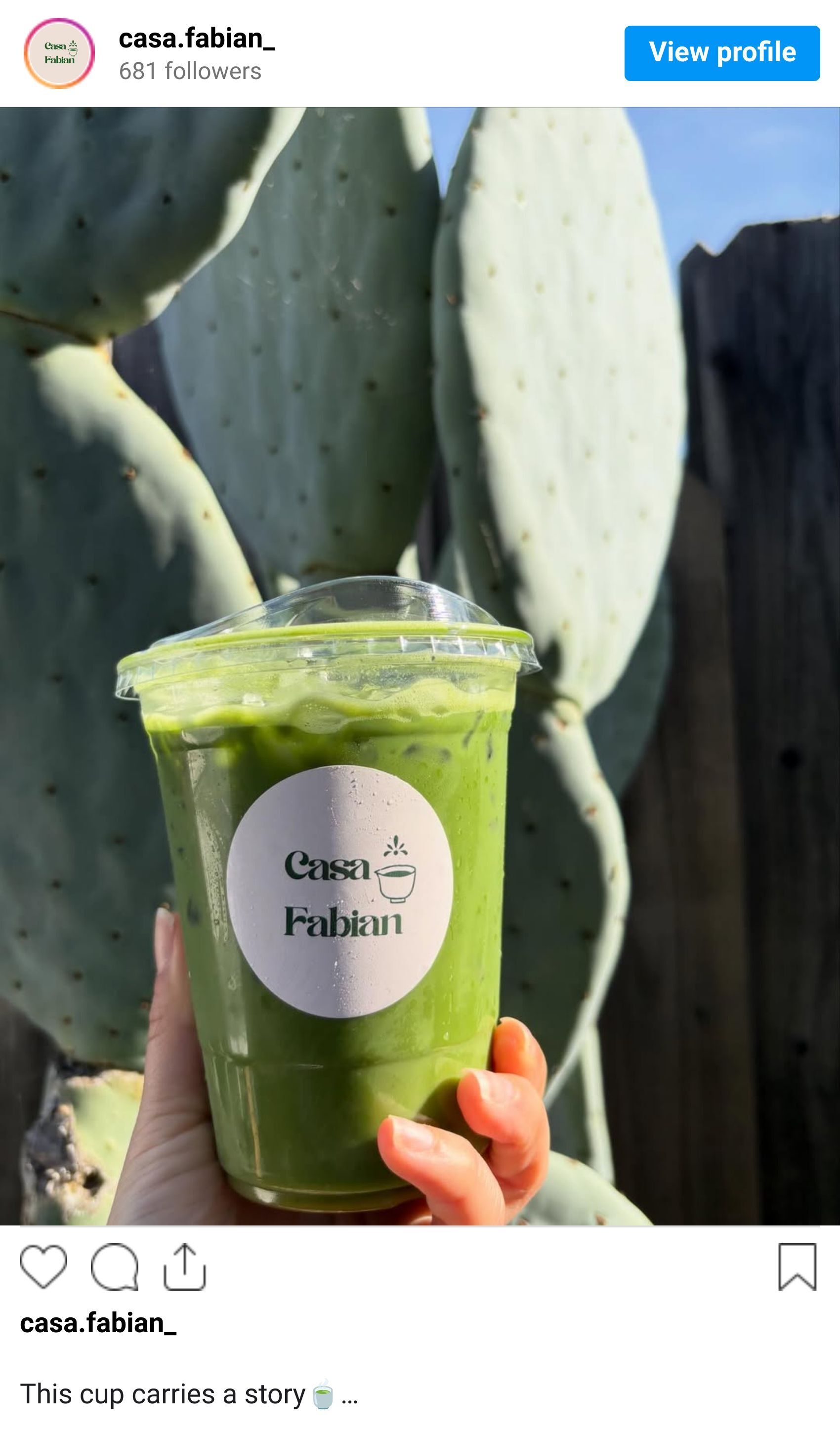
The middle part being, the part where you’re doing something most people would consider “cringe.” It’s that phase after you’ve started but haven’t fully “arrived” — where the gap between your ambition and your reality becomes visible to everyone on the street. And here you are: standing in your own kitchen, whisking a bowl of macha for a stranger who just parked in your driveway.
For Denise Fabian, owner and operator of Casa Fabian, an Instagram-only matcha shop that sells drinks via DM, that gap felt like a chasm for over a year.
After visiting family in Kumamoto, Japan, she returned to Napa with a sensory obsession: the delicate art of ceremonial matcha. It was the antithesis of the drive-thru versions she saw everywhere, "filled with dyes and sugars and powders." She wanted something clean. Her friends told her she should sell it and her gut told her she had to. But her brain kept her stuck. "I was so scared to jump in," she admits. "I thought I needed a trailer or a storefront immediately."
It’s a classic trap: the belief that the American Dream requires a bank loan. We call it professionalism, but often it’s just perfectionism acting as a socially acceptable form of procrastination. Denise eventually hit a breaking point. "I realized: if I don’t start now, I never will," she says. So, she just started where she was.
Her setup is aggressively low-overhead. There is no espresso machine, no commercial lease, and certainly no electric frother. To Denise, those plastic handheld kinds are a shortcut to a hollow product. "I don’t like the electric frothers because they don’t give you that micro-foam," she explains. Instead, she treats every order as a slow, therapeutic ritual performed with a traditional bamboo whisk.
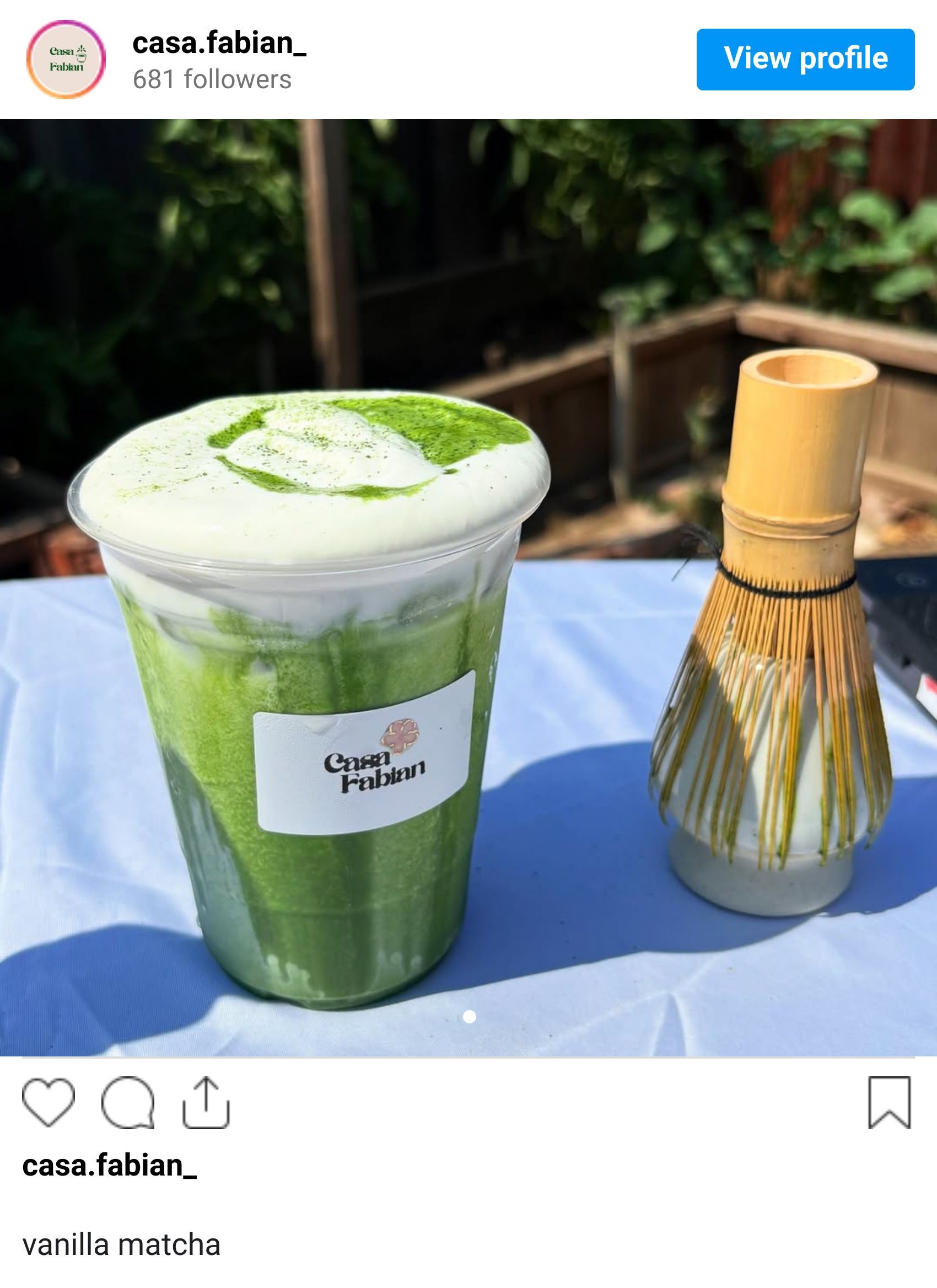
In fact, her work is more akin to a painter preparing a canvas. There is a specific rhythm to the whisking: a zig-zag motion that demands a certain tension in the wrist to suspend the tea particles perfectly in the water. The result is a vibrant, emerald micro-foam that feels like silk on the palate.
But her art is also in the fusion. Denise’s menu is a blend of Japanese precision and Mexican heritage. She pairs that macha earthiness with house-made Earl Grey syrups or fresh fruit purees, like a strawberry agua fresca topped with a thick layer of foam. It’s a unique flavor profile that you wouldn’t think would work but in reality, it’s creamy, fresh, and floral all at once, and executed in a kitchen space where most people just boil pasta.
But there is a weight that comes with doing things this way.
We are living through an era obsessed with scaling up and proving our legitimacy through profits. There’s a nagging, collective voice that insists a business isn’t real unless it’s expensive or anchored by a 10-year commercial lease. It’s the logic that whispers you shouldn’t use a bamboo whisk because it’s not efficient, or that you haven't “made it” if you’re still walking orders out to the curb yourself. That voice is lying to us all.
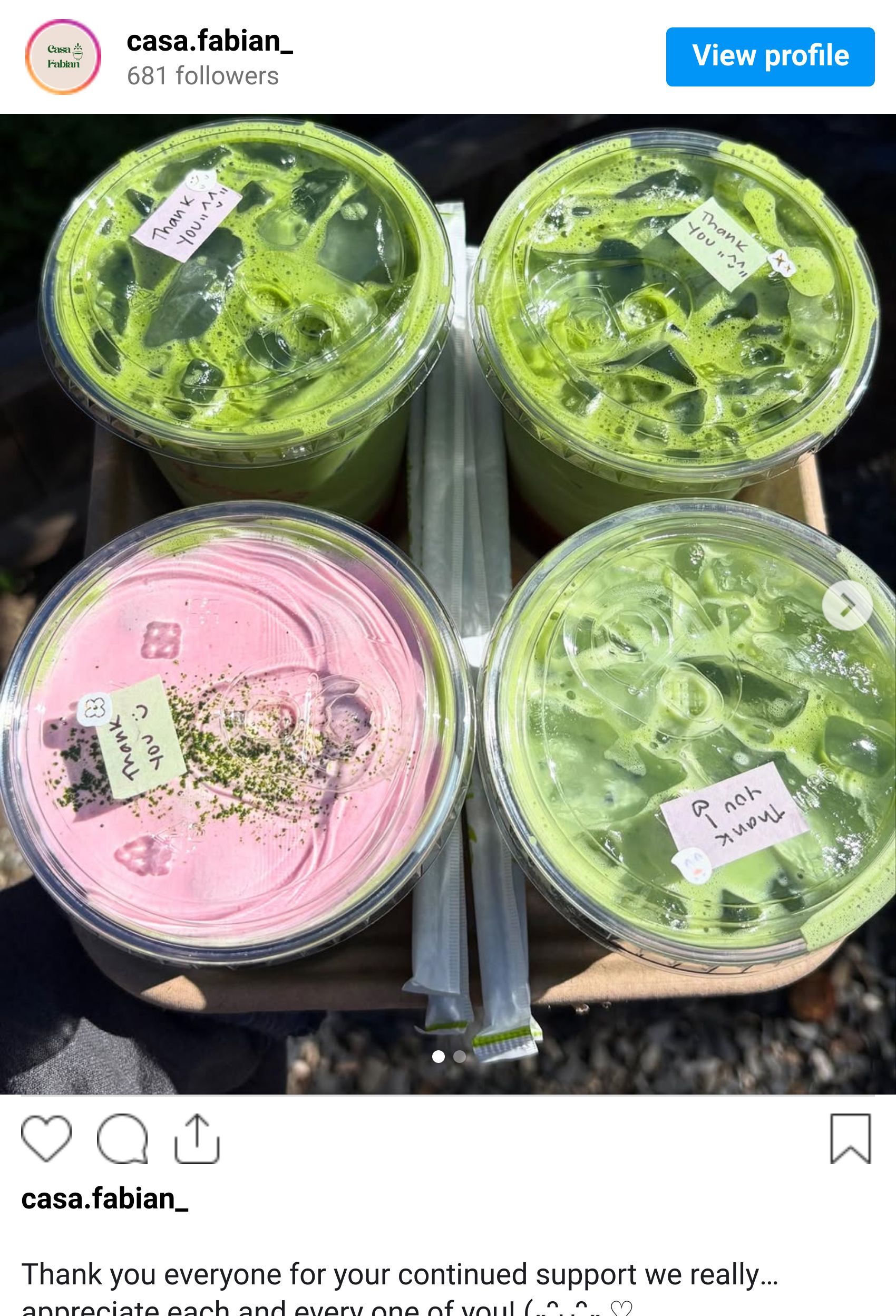
By ignoring the pressure to look like a larger business, Denise turned her driveway into the most exclusive reservation in town thanks to the sheer intimacy of the craft. There is no counter between you and the maker here, just a hand-delivered cup and the realization that the messy-middle, awkward startup phase might actually be the most beautiful (and rewarding) part.
Of course, it hasn't been a straight line of success. "There were days at the beginning where I had zero sales," she remembers. "I just wanted to give up. I thought, this is not going to go anywhere." But today, those zero-sale days have turned into 20 orders a morning and growing. It turns out we don’t actually need more optimized, big business cafes. We just need more people who are brave enough to let us see them whisking.